
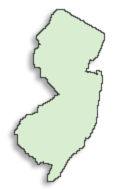
Home & Community-Based Services: State-Only Funded Programs in New Jersey
States may be required to contribute match funding to some federally funded long-term care (LTC) programs and to different extents. In FY 2003 states spent 21.4% of total state expenditure on Medicaid (NASBO, 2004). Total expenditures for HCBS are increasing and totaled $16.4 billion in FY 2001, with states paying between 1.7% and 13.3% of total health care expenditures on HCBS in FY 2001 (Milbank 2003). Medicaid spending grew quickly in the early 2000s, forcing state legislatures and officials to investigate ways to contain Medicaid costs rather than expanding services (Coleman et al 2003).
Program Name: Statewide Respite Care program (1988)3,4,28
Administrative Agency: Dept of Health & Senior Services, Senior Affairs Division
Population Served: Caregivers of adults 18+ with physical or mental disabilities.
Annual Expenditure: $5,750,000 FY03
Funding Source: Casino revenue funds, General Revenue, clients contribute
Number of People Served: 3,060 FY02
Eligibility Criteria: Aims to delay institutional placement & provide respite for carers. Income limit $1,635/mth (individual) & assets limit $40,000 (individual).
Further Information: Cost control: expenditure cap $3000 per person. Co-pay on a sliding scale. Other information Services may vary between counties. The waiver program has a much lower asset limit.
Program Name: Jersey Assistance for Community Caregiving (JACC) 3,4,28
Administrative Agency: Dept of Health & Senior Services, Senior Affairs Division
Population Served: Elderly (60+)
Annual Expenditure: $10,000,000 FY03
Funding Source: General Revenue
Number of People Served: 1,873 FY02
Eligibility Criteria: Same eligibility & services as the waiver (nursing home level of care). Aims to provide seamless services for elderly in their own homes who can pay for services initially then require Medicaid waiver support. Income limit FY02 $2,694/mth (365% FPL). Asset limit FY02 $40,000 (individual)
Further Information: Cost control: cost cap $600/mth, $7200/yr. No service limits. Co-pay on sliding scale based on income (individuals with less than $981,99/mth have no co-pay, individuals with $2,400-$2,695 have a $120 co-pay). Quality control: client satisfaction survey, case management reviews, complaint checks on providers. Consumer direction Can be consumer directed.
Program Name: Adult Day Services Program for Persons with Alzheimer's Disease or Related Dementias3,4
Administrative Agency: Dept of Health & Senior Services, Senior Affairs Division
Population Served: Adults 18+ with Alzheimer's or related disorder
Annual Expenditure: $2,483,000 FY03
Funding Source: Casino revenue, general revenue, clients contribute
Number of People Served: 884 FY02
Eligibility Criteria: Diagnosis of dementia & related disorders. Income limit $3,270.mth, asset limit $40,000 (individual).
Further Information: Cost control Co-pay on a sliding scale
Program Name: Home-Delivered Meals4
Administrative Agency: Dept of Health & Senior Services, Senior Affairs Division
Population Served: N/A
Annual Expenditure: $1,870,832 FY02 Appropriation
Funding Source: Casino Revenue Funds, General Revenue
Number of People Served: 8,094 FY02
Eligibility Criteria: No income or asset limit.
Further Information:
Program Name: Congregate Housing Services Program4
Administrative Agency: Dept of Health & Senior Services, Senior Affairs Division
Population Served: N/A
Annual Expenditure: $3,093,000 FY02 Appropriation
Funding Source: Casino Revenue Fund, General Revenue
Number of People Served: 2,994 FY02
Eligibility Criteria: Income limit FY02 $930/mth
Further Information: Cost control Co-pay based on sliding fee scale.
Abbreviations:
AAAs - Area Agencies on Aging.
ADL - Activities of Daily Living.
AT - Assistive Technology. Dept - Department.
FY - Financial Year.
HCBS - Home & Community-Based Services.
LTC - Long Term Care. Mth - month. Rehab - Rehabilitation.
Mth - month.
Rehab - Rehabilitation.
SCI - Spinal Cord Injury.
SSBG - Soical Services Block Grant.
TBI - Traumatic Brain Injury.
Wk - week.
Yr - year.
Footnotes:
(a) Note that some figures listed are the yearly appropriation, not expenditure.
(b) Sources of funding are listed in the language with which they are reported.
(c) The figures for number of participants are not necessarily figures for unduplicated participants.
Notes:
(1) The definitions of the services provided in programs may differ between states.
(2) Unless otherwise stated, programs are statewide.
(3) Programs where it is known that funding may come from a variety of sources, including non-state only funds (e.g. Older Americans Act) are indicated by the program name in italics.
(4) The table does not include Mental Health Services programs.
(5) All information is the most up-to-date found from secondary sources noted in the references.
(6) N/A means the information has not been found (not available).
(7) all programs primarily aim to support people to live in the community, therefore there may be additional state only funded programs but these are not directly to support HCBS.
Choose Another State
Select from Map or

Please give us feedback. The material on this page:
Was Very Helpful • Was Somewhat Helpful • Was Not Helpful • Has Errors